Is the Job Market Actually Good?

There is never just one number that gives you the whole economic picture. In some cases the number itself is bogus (CPI) and what we really care about is the change in the number over multiple periods. That’s why policy is rarely made on just one reading. As much as people are complaining about the job market, maybe the actual job market is still in good shape? Today we got the JOLTS (job openings and labor turnover survey) numbers for the last month.

The chart from the BLS looks like it has a lot of openings, with the separations (layoffs and quits) slightly below hires. There is a giant grain of salt on the openings, in my humble opinion. There are a variety of reasons, but what I’ve seen personally are: 1) openings that are just trolling for resumes; 2) openings to justify H1-B visas; 3) ghost jobs; and 4) fishing.

The first are job openings that aren’t for ‘real’ jobs, they’re just to gather resumes from applicants. Who’s out there? What skills do they have? What are their compensation demands? Second are openings to justify H1-B visa requirements by demonstrating it can’t be filled by a current US worker. Third are the jobs posted to show a company is growing and exciting. And finally, they might get lucky and land a person that is way more qualified than they would normally be able to nab. I don’t trust the openings data to reveal important information, and instead I’m just going to focus on separations and hires over the last few months. The pandemic distorts the data.

Here we see that both hires and separations are trending down. This would be consistent with the anecdotal stories of job hugging. Note that separations include both quits (which may often translate to an offsetting hire), and layoffs (which do not necessarily result in a hire). Looking at data from FRED, I suspect that quits have fallen off while layoffs are accelerating, but I haven’t done the math to validate that. However, we are pushing back toward more than one unemployed person per opening. And remembering my suspicion that a number of openings aren’t valid job openings, it means we are probably already more than 1 unemployed person per actual, real job openings.

Is the job market in good shape? I’m not sure it is, but I’m far from convinced it’s in bad shape. After all, it still appears we have slightly more hires than separations (which includes quits and layoffs). So if someone (on average) is getting hired when someone quits or is laid off, we are not in a bad state. And if we ignore the pandemic data, we see the number of unemployed people to open positions is much lower than the recovery after the 2008 recession. But we are certainly not in the post-pandemic world where we hit .7 unemployed people per opening. That was nuts. But if that’s all that you remember, and that’s your yardstick for the labor market, this middling to good labor market must seem like hell.

It Feels a Little Like a Lie

As Q3 GDP arrives, it’s above expectations. I hate anecdotal accounts as a basis for inferring trends, but we have had report after report of worsening conditions for individuals. Whether it’s visits to food banks or layoffs, or retailers pointing to weaker consumers, it feels like Q3 GDP should not have come in at 4.3%. I’m certainly not saying anything ridiculous, like the number is a fabrication or it should have been something negative. I live in the real world (or at lest do my best to discern the real world around me). Somewhere in the 3.5 to 2.5% range felt reasonable.

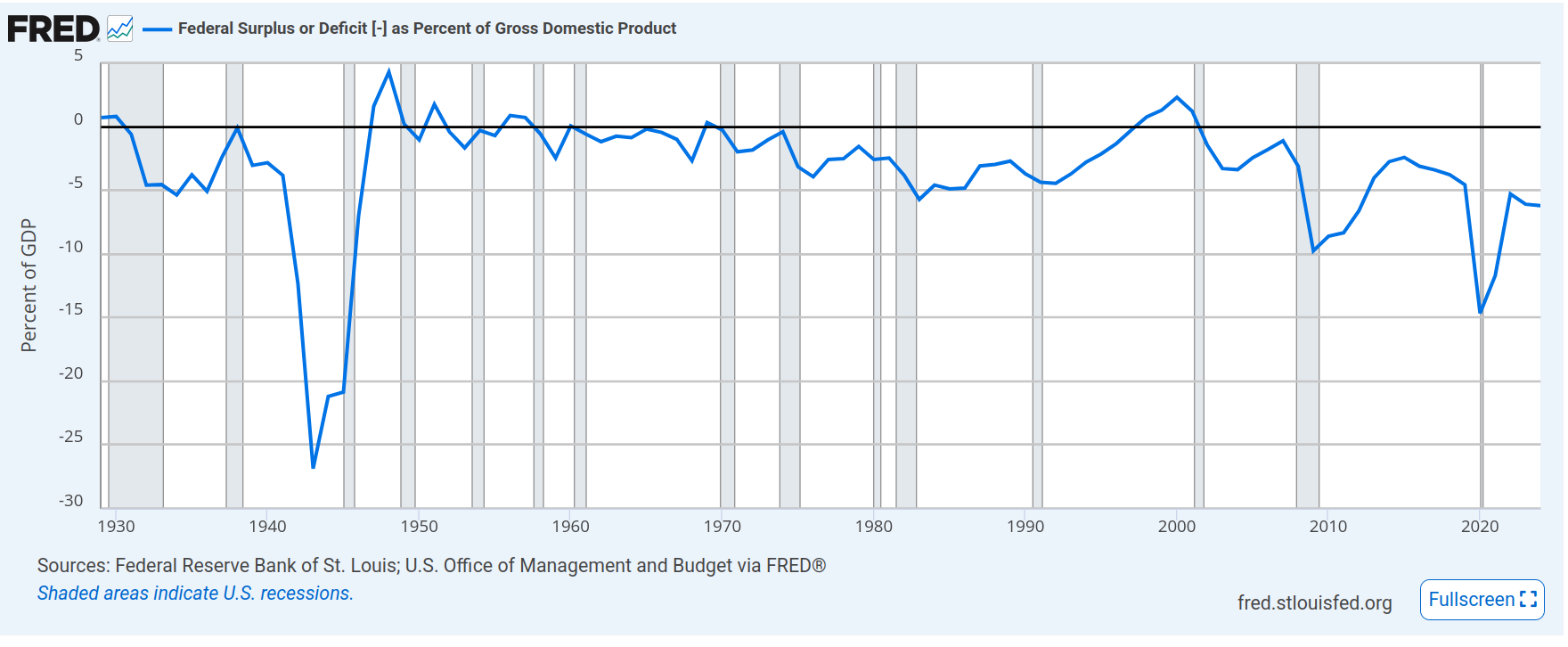
I’m still digging through the explanations, but one thing that sticks in the back of my mind is feeling like a 4 year economics degree was a joke. All the discussions about stability, or rule of law, or predictability as good soil for economic growth, are out the window. Apparently, you can run the economy like a drunken loon and it doesn’t matter. Or the government stepping in to buy stakes in companies is now a good thing (remember when the evil government stepped in to buy a stake in the big three)? Nosebleed deficits are now okay. Absolutely bonkers ideas from those responsible for our economy, like replacing income taxes with tariffs, is now calmly, if not happily, digested by the markets.

But the biggest shock is the degree to which tariffs don’t matter. It’s part of a larger narrative, where the lower income folks that make the stuff get the shaft and higher income investors and managers are doing better and better. (The managers and shareholders do well as profits, bonuses, and stock awards roll in for moving production overseas, while local workers lose their jobs. While the remuneration is tax efficient, at lower rates for capital gains, the unemployed eventually see their benefits cut because they’re ‘lazy’). We make life better and easier for the top earners while fucking the bottom quartile half three-quarters. Any discussion of taking the surplus from trade and using it to offset the negative impact as jobs shift overseas or are eliminated entirely is sidelined as socialism.

But I digress. We have had chaotic, possibly illegal, and arbitrary tariffs and restraints of trade (like who the fuck thought the government should get a ‘cut’ of GPU sales). And it doesn’t matter. Push for inflationary rate cuts. It doesn’t matter. Heck, I could be wrong, we might not get inflation. Make enforcement a function of bribes to a would-be monarch. No problem, apparently rule of law was not important as long as a bribe gets you what you want. Need to merge? Don’t look for clear guidance to support M&A, just give the grifter in chief and his cronies their vig. Policy clarity can be defined as knowing where and who to bribe.

Am I angry that GDP came in at 4.3%? It surprised me, but I’m not angry. I am frustrated that all the talk about the care and feeding of the economy, the hard choices we need to make to keep it running well, or the degree to which we need the best people running seems like a joke. All the ivy league, PhD, novella-sized CV people apparently were just tooting their own class horns. You took an economics at a community college and think we should return to the gold standard? Who the fuck knows at this point, maybe it will work. You’re a welder who thinks we should stop importing things from Turkey to boost GDP? Sure, why not. Think there’s a trillion dollars of spending that can seriously be cut? Sure, no problem, fuck the math.

Admittedly, this was a rant. Maybe we’re floating on a bubble that may pop badly. And then we might see the effects of stupid policies through the lens of a spiraling economy. And we’ll rediscover we need intelligent, skill people in charge. Or maybe not. Maybe Baumol and Blinder is as much a work of careful fiction as a theology textbook.

But that’s not something I want for me, my family, or my neighbors. Maybe we’ll see the government wade further into business by back-stopping any collapse with “free money” of cheap interest rates, loan guarantees, and buying even more equity in private companies. I remember when that kind of socialism was something Republicans vehemently opposed. Against all the good principles of being careful stewards of the pillars that hold up prosperity. Manipulating rates, funny money deficits, state owned companies, and corrupt officials were something we pointed to as markers of guaranteed economic suffering under tin-pot dictators. I never could have imagined it would be our future.

Here’s When Shopping Stopped Being Fun

This op-ed piece in the New York Times defines fine and shopping in a way I don’t completely agree or disagree with. I think I just differ on emphasis. And I think it’s a symptom that’s spreading. How we go from shopping as being kind of fun, even if we hate to admit it, to dreadful is I think emblematic of larger forces in the economy.

What is the point of a Nordstrom, Macy’s, or Bloomingdales? To cater to middle class customers. That’s where the middle income consumer once bought “nice” clothes and accessories. There are two parts to that experience. The first is getting something that feels worth the money. That can be either because it’s hip or because it’s quality. Sometimes both. The point is, you give them money for something you feel is worth the money along some axis of value. The second part is the experience. That’s an attentive experience, meant to serve (if not slightly delight) the shopper.

I can’t say I’ve enjoyed going into a department store in years. First is the matter of quality. I have items I bought years ago and I just don’t find the same quality now. These were not exceptional. Just decent pants, shirts, suits, or sweaters. If I’m going to shop acrylic sweaters, Amazon is fine. There is no reason to spend $200 on an 85% acrylic, cable-knit sweater when virtually the same thing is available for $50 elsewhere. But moreover, the shopping experience isn’t there. Either you feel like you’re getting herded to the register as fast as possible or no one is around to ring up your items.

First, fewer and fewer companies own the stores in which you shop. Macy’s, Bloomingdales, and Blue Mercury are the same company. Nordstrom is independent, but Bergdorf, Sachs, and Nieman are the same company. Catalyst Brands holds Brooks Brothers, JC Penny, Nautica, and Eddie Bauer. It may seem strange that a mall with a half dozen major stores is only representing two companies. They may attempt to provide unique retail experiences, but there’s no long term advantage to running multiple stores. It’s unlikely the war between margin and profit may sometimes favor large sales volume at lower prices or a smaller sales volume at higher prices. We see consolidation across industries. Monopolies do not necessarily result in higher prices. They may result in lower margins, less choice, and lower quality. But most people only focus on price as the harm.

Second, tastes have changed. If you see someone in a suit, chances are they work for the government, they’re in sales, or they’re going to court in one way or another. Many people dress informally at work. Even though the once promised “age of remote work” is fading into the “return to office” reality, it does not mean suits are coming back. Even customer facing roles are much more casual than twenty years ago. Going to Macy’s to buy a suit is something the middle class worker is not doing as much. While I personally feel that dressing professionally encourages (but never guarantees) professional behavior. That is not a claim based in anything other than my supposition.

Third, the middle class itself is in the late stages of being gutted. Successful retail is bifurcating into low end retail (Walmart and Dollar Stores), and high-end retail. Target, once a discount retailer, is now considered “middle class.” The middle class retailers, ranging from Sears to Bloomingdales, have seen their customer base shrink and will continue to see it shrink. This is evidence of the worsening wealth income inequality in the US. In fact, the middle class retail sector has been rife with bankruptcies over the years.

But the fourth issue is what I think will ultimately kill most US retailers. That is the destruction of the brands themselves. When you buy a t-shirt or sweater from a retailer or a brand, it’s produced by the cheapest producer somewhere in the world. In some cases, the retailer or brand is just buying an already existing product. Why would consumers bother with a brand or retail premium, if already financially stressed, when the same goods are available on-line? The same manufacturer could be selling a sweater both through a brand or retailer and Amazon as one of a dozens of sellers. When the internet removes intermediaries, there is no reason for a brand or a retail experience.

These trends aren’t just effecting retail shopping at the mall. To a greater or lesser degree they are effecting many industries. A shrinking middle class, consolidation, and disintermediation will likely destroy legacy brands and retail channels over time. Surviving brands may become just nameplates or on-line names, with essentially the same product available through a variety of branded and non-branded channels. Would you buy an off-brand microwave? Would you buy an off-brand microwave if you knew that almost all microwave internals are made by just one company? Would you buy the off-brand microwave if the brand premium doubled the cost? Or just added a few dollars? Difference without distinction, a stressed consumer, and the ability for manufacturers to go direct may alter even automobile manufacturers.

Prostitution is Next

It’s arguable there should never have been a ban on marijuana. That said, I think what’s important to the psyche is the relaxation of the ban. And there can be many good reasons why the ban should have been relaxed and how many people will benefit more than be harmed by relaxing the ban. The point is it was a vice we were all told it was wrong for so many (sometimes fabricated) reasons. The ban was relaxed. The same is happening with gambling. It was once illegal, immoral, and even predatory. Now it’s available on your phone in every state, courtesy of sports books and prediction markets. The last serious prohibition left is prostitution. Something which is legal and regulated in some countries and strictly not illegal in others. But in the United States, outside of a few particular counties, is illegal.

There are reasons it is illegal. Some of these reasons are good. Some are bad. Some are documented through rigorous study, but some harms are largely the byproduct of its legal status. Remove the incarceration of women for solicitation, and the risk of getting labeled a sex criminal, and some of the harms go away. But as we sail past broad legality for intoxicants and gambling, prostitution is the only vice still left standing. And many are arguing it should not be illegal. I don’t know that I agree or disagree because many people are disingenuous in their arguments around vices. Some argue for it because they don’t want to be arrested (as a customer or provider), rather than a genuine appeal from reason or data. And some argue against it because of their desire to impose their morality on others. It doesn’t invalidate the arguments, but the motivation makes it harder to judge the argument as honest. I don’t know the correct answer, but given the track record of those that profit from the sale of (often women’s) bodies are rarely the women sold.

It will be a chip shot to the green for Only Fans or a dating site to offer in-person or compensated dating experiences. Ashley Madison was a scam, but how long before a dating app with low prospects allows women to start advertising? (I say women but the same applies to some men, where economic vulnerability has made some men exploitable by other men). After all, this ‘disrupts’ dating, something “we all know isn’t working.” And I can imagine the excuse would be that policing this in practice is impossible, anyway. That many people just use these apps to ‘hook up.’ Like gambling, once the apps move in, and there are investors, it will be legitimate. It will be a business out in the open. And if you don’t like it, it’s because you are a prude or not ‘with it.’ People will do it, so why not offer it through the convenience and safety of an app?

Would prostitutes be better off, if they were able to openly solicit? I could see benefits, such as screening out out violent clients. Although, given the track record of safety in the hands of tech bros in other contexts, it might be a ban is voided by quickly creating a new account. I could see women more willing to file rape charges against clients because they don’t fear arrest. However, I could also see apps black-balling any woman who did file such charges. These disruptive companies are often more subtly exploitive than the pimp. Uber has been accused of manipulating fares to give the impression a living is possible as an Uber driver, but the reality may be a below minimum wage grind. Uber doesn’t need to exploit them, the drivers exploit themselves by chasing smaller and smaller payouts. How well silicon valley would treat sex workers is practice may be as exploitive as the worst pimp.

How likely do I think this is? Ironically, more likely because of the Epstein scandal. With so many establishment men, including David Brooks, Larry Summers, and Bill Gates being seen around Epstein, it could perversely make the prohibition of seeking sex workers a class-based rule. (Not that I have any indication any of these men actually did anything illegal or even unsavory – other than their association with a vile person). If you’re wealthy and elite, it’s accepted, but if you’re not, it’s prohibited. And as we all know, the United States is a country full of temporarily embarrassed billionaires. Why shouldn’t Trey Schifflet from Beckley, WV (a made up persona) be treated to the same earthly delights as his favorite president? Trey, who sits at home smoking weed and playing Call of Duty in his parents’ basement. Who burns up his Uber money gambling through Kalshi on sports. Who has found every dating app frustrating because he’s not a “high status male.” Who looks at his jaw or his height or the slightly more pronounced ears as the real reason he’s passed over. And nothing to do with the fact his app profile features his sucked-in, two-pack abs, and actually calls women ‘females.’

And we live in a world where the pursuit of money is almost a dispensation for wrong-doing. Even Sam Bankman-Fried has has a moment or two of seriously attempted rehabilitation, including possibly restarting his exchange (in name only) FTX. The President and his family are openly grifting using meme coins. It’s not a bribe if you squint your eyes so hard they close. Whose family business works with and may become a prediction market, like Kalshi, to openly take bets. Who has turned the pardon into a coin-operated dispenser, giving pardons to wealthy, well documented, easily convicted, and unrepentant fraudsters. The pursuit of profit is sacred, beyond question, and insured against prosecution if the potentate is given his vig.

In this environment, where subsidizing illegal activity is just “disruption,” why should this last taboo stand? To be fair, there are many who want to see the laws prohibiting sex work repealed because they see women whose exploitation is facilitated through the risk and fear of arrest. Or whose avenues for legitimate work are proscribed because of a prostitution related conviction. But if the tech bros smell blood in the water, or rather money to be made, they will pounce on your resistance to legalizing prostitution. Posts on X, undisclosed sponsorships to creators, and AI slop comments, will drive you to feel bad for believing it should be illegal. It should be just as easy as Uber to order up a date. After all, it’s just like Only Fans, but IRL. It will happen anyway, so in-person access should be legal and available through an App, with the App taking a cut to profitably cover expenses like payment processing and client screening. And once Andreessen-Horowitzes of the world are behind it, it will be a legitimate enterprise, an investment, a company to IPO, and much more than simply pimping and profiting from the vulnerable.

First Time Claims Make Less and Less Sense

The number of first time jobless claims (a weekly statistic measuring the number of folks filing their first claim for unemployment insurance when they become unemployed) has been bouncing around 250,000 for the last year and change.

A related number, the continuing claims, which measures the number of unemployment claimants who are continuing to file for benefits has also been remarkably steady.

While it looks like there was a big jump in May, it was a change from 1,800,00 to about 1,940,000, of about 7-8%. And then it stayed steady. Meanwhile, unemployment has been slowly creeping back up over the last two years.

Meanwhile, we see a definite softening of new jobs created. The change in non-farm employment shows a degree of cooling in the economy.

What would we expect to see, if job creation is slowing, along with an up-tick in the unemployment rate? We’d expect to see more claimants for unemployment insurance. Fewer jobs, more layoffs, and lots of stories about graduates that can’t find jobs (who cannot apply for unemployment insurance), indicate a soft labor market. We see the average weeks of unemployment (how hard it is to find a job once you lose your job), tick up slightly but not decisively, by about 2 weeks, but still within statistical noise.

With today’s CPI coming in a lot softer than expected, this will give the Fed a green light to cut. But as much as we see evidence of a slowing job market, we don’t see more and more people applying for unemployment, what gives? Is this just what a more normal employment market looks like after the go-go job markets of 2021 to 2023? When there were many times more jobs open than there were candidates?

First, we have to remember a few things that may be complicating the first time claims picture. First is that the new graduate cannot claim unemployment. If a new high-school or college graduate cannot find a job, they cannot claim benefits because they haven’t worked for an employer that paid into the insurance pool. If you quit because your commute would be 2 hours (after you moved because even your boss was saying WFH would be the new normal), you are not eligible. If your employer claims it was for cause, you are not eligible. That’s why many employers will try to cite ’cause’ as the termination reason, even though they’re firing dozens or hundreds of people at the same time. Nor are independent contractors. if you were an independent IT contractor at US AID and your contract was terminated, you are not eligible. You basically have to work on a “W-2” basis for an employer that terminates you for non-performance (or criminal) reasons.

Then there are other reasons, such as deciding not to claim benefits, because you can make more money driving for Uber. (Or at least you think you can make more money driving for Uber). If you make more money than your benefit check at a part time job, you can’t claim benefits. Some people won’t claim it out of principle. And some people live in states that felt too many workers were getting cushy at home instead of returning to the workforce and made it harder to claim benefits.

Does an increase in first time claims (or continuing claims) predict a recession? No. It is a trailing indicator. Generally corporate profits fall, along with Wall Street’s expectations of future profits, as the economy slows. At that point corporations realize revenue won’t grow, so they have to cut costs to keep their margins. One quick way is to lay off staff. Often, this is a time for the company to prune their deadwood projects. These are projects they’re putting money into because it seemed like a good idea at the time, but no one seems to be able to kill it now that it’s shown to be a dud. Managers are human, too, and subject to biases like the ‘sunk cost’ fallacy. This is the push that management needed. But sometimes they just reduce head-count to the point of pain, because they can coast on their accumulating inventory until business improves. Only after output falls (a recession begins) does employment really contract.

But it is still striking there’s been so little movement in first time claims. It feels like you could place bets on it being between 220,000 and 240,000 next week and the week after. Do I think it’s being manipulated? No. While it was popular among the right to say Biden’s numbers were all fake and made up, I never thought that claim was based in reality and I don’t think there’s any skulduggery now. Did Trump send a worrying signal by firing statisticians? Yes, but I believe the core of the process is still very much intact. Are the numbers massaged? Yes, sometimes seasonality needs to be taken into account, otherwise the increase or decrease would be overstated and the period to period changes are harder to compare. And if you think that’s an issue, most numbers are also released without seasonal adjustment. So, go look for yourself. Are numbers revised? Yes – because sometimes data doesn’t come in on time. This is especially true of the employment survey, with some employers submitting data weeks after the data was due.

What we may be seeing is a change, or a beginning of a change, in the relevance of this number. Due to a variety of factors, it’s becoming less sensitive to changes in the health of the labor market. If you lose your job, your ability to access smaller benefits may be reduced. And employers may be getting better at incentivizing you to quit and unable to access your benefits. For example, we need you to report to work 3 states away and we won’t help you move. The first time claims may be very slow to move, if at all. Like we are seeing unemployment hit 4.6% but little to no change in the first time claims.

Toxic Masculinity is not Hard

I’ve watched the debate on “toxic masculinity” and people discussing that topic seem to fall on the far sides of a dividing line. On one side you have folks that see any “masculine” behaviors as toxic and on the other side people loath to call any specific behavior as toxic. The former are the well known crowd that is stunned when little boys are given dolls to play with and immediately bend them in half to work as imaginary guns. The latter are a new lot that is bent on alerting us to the collective failure of so many young men to mature. Neither one seems to have a definition of toxic masculinity which seems accurate or particularly descriptive. I think that is by design, although to what end I can not really say.

What they both agree on (and I think is not controversial beyond people who argue just to argue) is that some behaviors are more likely to be exercised by men and others by women. Men can be extremely nurturing and women can be vicious competitors. But, if you pulled a BoG standard man and woman out of a bag, you’d likely find that men are more likely to apply competition where it’s not wanted and women to nurture when it’s not warranted. These are differences of degree more than kind. You’ll find examples of both traits in each subject, but their application and inclination toward those traits will vary along sex lines. Much like a sheep herding dog will unwittingly and inappropriately start herding anything by nipping at the heels, including children, men and women are bred toward some behaviors more than others. It is no more remarkable than the mating dances bred into even the simplest animal.

What is toxic masculinity? It is the application of a gender stereotypical masculine behavior outside the bounds of healthy utility. For example, not asking of directions when you are clearly lost. Or competing with your spouse or children with the same vigor you compete against your great nemesis in business. It’s that simple. When a father comes home and plays basketball with his 11 year old son with the same physicality, aggression, and assertiveness he would use against other men his age, we find that completely inappropriate. If the excuse is to ‘teach a life lesson,’ we have to wonder what that lesson might be? As his son limps into the house, whimpering, abrased, and defeated, with his father crowing, few would see that as healthy. There is only great risk in the child learning to bully who they can.

That display of unhinged aggression and competition is different from winning against your child because you are taller, stronger, and faster, but doing so with moderation. Tuning back the unbridled aggression to teach both a sense of competition and how to play a good, clean game of basketball, is a nurturing, fatherly act. To understand you play the best game you can, even if you think you might lose, and to acquit yourself well, both in victory and defeat, is part of raising a good man. And to let your boy win when he plays well to enjoy the feeling, cultivating the behavior you expect when he does take the day. It also teaches him there are more important things than winning this round, like teaching and nurturing the good in people over a lifetime. It is possible to have both a competitive spirit and a nurturing soul.

It is also worth learning that more controversial tendencies have their place and time. Aggression, applied poorly, benefits no one. But sometimes aggression is needed. In the extreme example, the Ukrainians are aggressively and forcefully resisting decimation by Russia. Like competitiveness, aggression does not need to be taught to boys, their normal hormones will provide it. But it’s correct and proscribed uses need to be taught. Be aggressive when playing sports, but not boundlessly aggressive outside the rules of the game. Be aggressive when trying to win against a business competitor, but within the confines of the law.

One crowd will demonize any form of aggression as a negative trait a pathological “society” instills in males. (“Society” does no such thing and likely provides bounds for their aggression). The other side will see completely inappropriate aggression as something we should be afraid to censure, lest the lads continue smoking cannabis while playing Call of Duty in their basements. It is their choice to do so. At the end of the day, the best lesson we can teach is they are responsible for their choices. We need to find that middle ground where boys are raised to be good men. Because the other options, of either over-restraining or under-restraining their impulses will not be toxic – they will be radioactive. It will poison not only the current generation but deform the subsequent ones.

What if Data Center Space Were Free?

First, what is a data center? It’s a slightly archaic term, meaning where the firm aggregated its computer data. It’s from the age of centralized computing. While desktop computers were intended to run on household current, shared computers (mainframes, VAXes, Enterprise databases, etc) were to be installed in rooms with commercial power and air conditioning. These were often installed with special raised floors, allowing cables to run beneath your feet. The space where we put servers has changed, but not radically. Modern servers, although they use processors that are of the same instruction set as desktop and laptop processors, have constantly screaming fans and power requirements that can strain a typical 15 amp household circuit or typical office circuit. And rather than a raised floor, the cabling is now overhead.

The first big change was going from on-premise to hosted infrastructure. Prior to the 2000s, if you went to an internet company, you would likely be taken to their data center. It would be in the same building, or one building over, from their offices. Was there a server problem? Walk over to the data-center and take a look. (Tip: if the servers all looked the same, you could eject the CD ROM tray to help you find it). Starting in the late 1990s and through the 2010s, the data-center moved to a shared facility. Now, the data center might be hundreds of miles away. You might never visit it, or take the tour once before signing up. You ship your equipment to the site and they put it in racks for you, connecting cables as you specify. Or in some cases, lease the equipment from them. From the 2010s on, the move became to the cloud. In the cloud you are renting the equipment in very short time increments. The cloud provider gives you an API to manage the systems.

When you rent space in a data center you are paying for power, networking, and floor space. Power is a combination of the power your draw and some part of the infrastructure, like the backup generator. In a shared data center, you are generally responsible for your own uninterrupted power supplies. Networking is a function of how much of the bandwidth you intend to consume, or you can provide your own network pipe. Within the category of floor space you can add features like physical security, but it is essentially your portion of the footprint of the data center. All the other costs like staff to make sure the physical structure is operational, or someone to attach a cable, are either baked into those costs or billed separately. If you’re a small company looking to host a set of servers, you would likely pay for a rack (a single tower of servers) or a cage (essentially a fenced in area with a lock on it). That square footage combined with the power and network bill is your monthly fee for hosting your servers.

The cloud obscures all that and layers on management. You no longer have to set up your servers, storage, and networking. The cloud provider does that for you. You can still provision a VM or create a virtual (fake) network, but the physical hardware is hidden from you. Your interface to the computers is the API that cloud provider publishes. The costs can be per hour, minute, or gigabyte to seem ridiculously low. How can you justify managing your own servers when it not only involves all the costs mentioned above, but hiring and managing an IT staff, compared to those low costs. There are times when companies have been nearly bankrupted by their cloud spend, but for many it still feels like a deal. And it’s highly flexible, even if getting the costs down means buying into multi-year, inflexible arrangements more akin to leases.

But that’s not the real draw of cloud. Remember floor space, power, and networking? When a data center runs out of floor space, construction time is measured in years. It may not be practical to deliver more power. And even adding more networking always seems to take the networking providers months just to turn on a bit of fiber. God knows why. If you have your equipment in a data center and need to add more, the answer could be ‘no.’ It requires you to figure out where to put the equipment and how to communicate between the two data centers (although some providers had a solution for this). For all intents and purposes, the power, floor space, and networking in the cloud are infinite. And they handle other issues like fail-over, assuming you are willing to pay for it.

But we may be heading to an interesting situation, should the AI hype cycle crash. We will wind up with a lot of data center space heavily over-subscribed with power and networking, with no clients. We might be in a glut of modern data center space that is re-possessed by PE firms and regional banks lending to the projects. This would be like the glut of dark fiber that made YouTube and other social media initially affordable. You might have a group of lenders that’s suddenly trying to get rid of a largely completed data center at a fraction of what it cost to build. All you need to do is walk in and secure agreements for power and networking. The infrastructure will be there in varying degrees of completion. From powered on to cement slab.

What we lack is a view of operating systems that spans multiple computers. The cloud would still have an advantage for many companies that denuded themselves to system administrators to hire cloud administrators. It’s also hard to cost compete with a company that can smear those costs over a much larger number of systems. The idea of companies taking their data centers back in house isn’t what I think is likely. But it may open the door for newer and cheaper competitors. If not general cloud competitors, then maybe specialty providers that provide storage only or back up facilities in case there’s an outage? These new data centers would already have fat pipes to reach out to AWS or Azure.

Maybe another option is to finish the building and bring computer controlled manufacture. You would have plenty of power for laser cutters or mills. Even industrial processes like powder coating or electroplating require a significant amount of power. These data centers are being designed with more than enough power to spare. Like we divide existing data centers into ‘cages,’ these could also be divided up into cages for specific manufacturers. The data centers are also equipped with loading docks for semis. You want to make something like a bed frame that requires a CNC cutting board after board of MDF and grade ‘A’ plywood? No problem. You have a linear, football field sized building, where it gets cut, finished and packaged in one long assembly line. Maybe it would serve high-tech, multi-modal manufacture? You sit in a suburb of DC as you basically run a CNC cutter in Lousiana?

The down side is the AI chips themselves will have a very limited shelf life. Although using firms are extending the depreciation targets, the goal of the chip makers is to produce a chip so much better than the two generations ago, that it isn’t economically viable to operate the old chip. That’s a three year lifespan. Not because it can’t do the work, but because the electricity cost is too high. Maybe some of them could be used to support vision and robotics tasks related to manufacturing, but that may be only a small subset of what’s being purchased today.

The Untethered World

God is dead. God remains dead. And we have killed him. How shall we comfort ourselves, the murderers of all murderers? What was holiest and mightiest of all that the world has yet owned has bled to death under our knives: who will wipe this blood off us? What water is there for us to clean ourselves? What festivals of atonement, what sacred games shall we have to invent? Is not the greatness of this deed too great for us? Must we ourselves not become gods simply to appear worthy of it?

The full quote by Nietzsche is amazingly dark. Having removed god from our lives, we find there is nothing to replace it with, other than our own super-inflated egos. Religion is a good that is in the eye of the beholder. The same person, who grew up in the Midwest, sees beauty in Islam, might find the Catholic church a bankrupt system of hypocritical power structures meant to keep women subservient, facilitate abuse, entrench power, and accumulate wealth. (And they do this with no sense of irony or of having spent any real time amongst Muslims or in Muslim countries, with only a couple of units in World History and Tik-Tok as their intellectual foundation). The world in which they were raised is intolerable rubbish heap, but about which they are largely ignorant seems a lush garden. To understand why this is, we must acknowledge the quote from Nietzsche realize we tore it all down before we built anything else.

But what did we really tear down? Let’s go back to that person in the Midwest, who is dealing with one of infinite variety of moral choices with which we are all presented. It could be as grave, involving great pain and suffering, even life or death, or it could be as simple as agonizing over a small lie to avoid going to a social event. Imagine having to reconstruct, for a kind of first principles, the ethical and moral thing to do in that circumstance. To get through the day, the effort would be staggering. Which is why we create short-cuts for ourselves. We might call this an internal code, even a terrible one, such as “I only help people when it feels right.” We have our feelings, such as feeling guilty about something or gleefully confident about the choice. But we also look to the examples set by others. These could be people in our own lives, like a relative, or a person we don’t know, but whose example we use to gauge our response.

In the 15th century, the person facing a moral question might look to the lives of the saints. Should I kick dogs? St. Francis would definitely not kick dogs. Should I go off with my significant other into the bushes, even though the desire is great? There are plenty of saints who stayed chaste, even though they were tempted. Should I do anything for the beggar at the end of the street? There are plenty of examples of helping the poor. Should I be honest about why I’m late to church? There are plenty of examples honesty or acceptable fibbing from other saints. Should I desert the army, given the fighting is not going well? Maybe no saints, but other examples from our shared history or mythology. And if you were to go back to the Ancient World, you would find people who might not believe in a literal Apollo, but might mine the stories around gods for kernels of wisdom. I’m going to use a catch-all label, which is imperfect, but a reasonable container for all these – they are heroes. And their stories are their legends.

A hero is someone who may have done something great, but is basically someone we admire and would emulate. They may be individuals, like a saint or a sports hero, or a collective of heroes, like the last holdouts in a righteous but desperate struggle. Their life is an example provided through the accounts and stories, sometimes apocryphal, that surround them. If we admire them them, and identify with them, we have a moral short-cut to questions such as “should I lie about getting to work late?” And if giving the honest answer results in censure or loss of the job, it might help provide the resilience we need to get a new job or to show we will do better going forward.

There is an old saying that burdens are more easily suffered when shared. I may not know anyone around me who is suffering the same burden, or I might not be able to discuss it, but in the hero I have someone who shared it. Even though they may have died hundreds of years before, or may not have existed, I know that they suffered the same pain and fear and suffered it with grace and dignity. The delightful J. Draper points out many who were publicly executed went to the gallows happy. Many saints and martyrs died remarkably calmly, because they could think of the other martyrs and saints that had gone before them. In addition to the belief that the pain they would experience would be temporary, and that their reward was to come, but that it was also a shared suffering.

When we tore down god, we tore down the bevy of heroes and examples that circulated in the culture. That left historical, cultural, or racial heroes as our source of inspiration. In some cases, this was not unwelcome. The American mythologies are not religious in nature, based largely on secular ideals. The old stories about the shared Thanksgiving, or the tenacity of the Minutemen, or the mythos of the explorer are the enlightenment version of the lives of the saints. This mythology is fit for a world that no longer believes in a fantasy of heaven or hell, focusing their struggles on real events and their outcomes. And while these mythologies could survive god being removed from the public sphere, they would also fall.

At some point we would learn that George Washington was a flawed human being. In the minds of some people, an evil human being. I would argue that George Washington was, if not the Zeus, the Apollo of the American pantheon. As he fell, and Thomas Jefferson, and then the mass of other founders, we are left with a few modern examples. And these modern examples are not bad. There more than enough to admire in the stoic heroism the marchers on the Edmund Pettus bridge met their moment. Or the many examples of sexual or racial ‘breakthrough’ athletes, entertainers, or politicians who overcame so much to just have their basic rights. And, for now, they still stand. But in the endless scrutinizing, rethinking, and re-examining of history and these stories against current notions of moral norms, will we lose these, too? Will it come out that, as sometimes flawed people, they were no more gods or great than any of the other people evicted from that role?

For most people, they are less inclined to think of John Lewis as they are are to think of sports heroes or fictional heroes. Or maybe heroes in their personal life, like some family member or friend. And we recognize the danger in ‘creating martyrs,’ whereby people are elevated to heroic status due to mistreatment or persecution, perceived or actual. But the landscape is becoming more fragmented, more isolated, and maybe only individually meaningful. And even those heroes can be quickly torn down, as we learn they are deeply flawed (if not horrible) in other parts of their lives. Since we often judge these same people who tried to make moral choices against modern notions of morality, it’s not surprising we find them coming up short. Could we one day see John Lewis in a horrible light as yet another false idol to be torn down. Maybe in a future morality the choices that good man made may seem unjustifiable.

In the end we are left with nothing. We lack the easy guide posts to moderate our behavior. There is a great benefit to approaching each problem from first principles, but it does not scale to to the myriad of challenges we face each day. We are also left with no one to share our suffering. Without a hero or martyr to look to, to see our own suffering in their suffering, we have to bear it alone. Isolated and alone each pain becomes intolerable. Having torn all of that down, with nothing to replace it, like rudderless boats we lurch from idea to idea on the shifting wind of social media. Of course we become a self-centered people. Of course we suffer from the disease of nostalgia. Of course we try to fruitlessly tape together now broken idols. But no degree of xenophobia, reactionary policies, or renaming military bases will fill that hole if there is nothing left to fill it.

Government Handouts are the Exit

It’s almost undeniable that the only reason the US economy has started slipping into a recession, or would have slipped months ago, is that investment in AI has driven about 1 to 1.5% of GDP. That’s an insanely huge figure. Not AI profits – which are years away even in optimistic projections. Unlike investments in roads, for example, about 60% to 70% of the AI investment is in chips that become obsolete in three years, but maybe as little as two years. The growth is happening so fast that power companies can’t keep up, which has lead to basically using old jet engines to turn hydrocarbons into CO2 to power those chips. All to give you an answer that might or might not be right, or just to generate offensive AI videos like Mahatma Gandhi eating a burger. Just to recap: the only thing keeping us from a recession is money being plowed into quickly obsolete “assets” (it’s hard to call them that – they’re almost a consumable), powered by setting even more climate change. The cement buildings, the data centers, left behind have a multi-decade life, but no one needs that much data center capacity. And if they’re unoccupied, they will go to shit.

So far the financing for this has gone beyond traditional investment to weird circular financing where company A invests in company B, who buys products and services from company A. Company A can then point to future orders and sales. Company B points to more investment. Everyone’s happy. Number go up. Company B then makes absurd projections of incomprehensible investments that need to be made, causing investors to snap up associated companies, and everyone happier because more number go up. But that’s okay, Company C promises (not necessarily delivers) future investments in A, making more number go up, after A promises to buy 3 times that much in company C’s products and services. At no point is numbering going up because Company B is anywhere near making back a significant amount of what it spends on short lived assets and jet fuel to power its data centers.

But surely this is good because it will make us all richer, right? Not really. If you think that, you haven’t been following along. I’ll give you a minute to catch up on how wealth inequality is both bad and accelerating. The benefits will be concentrated in the hands of the wealthy. Most of the benefit will be concentrated in the hands of people like Sam Altman or Mark Zuckerberg (who’s been searching for some new idea – any idea – since Facebook). The bonuses to execs and large share holders would be fantastic, if there any real chance of any of this earning back any money.

David Sachs and Sarah Friar made a statements which might indicate how these companies intend to square this circle of constant investment, no profit, and concentrated wealth. They will make the argument that if the government does not step in to support their narrow version of AI, the economy falters, and we go into recession. To keep that from happening, all we need to do is to make people like David Sachs wealthier, by bailing out their AI bets when the start to go bad by backstopping their loans or printing more money by driving down interest rates. (And therefore boosting inflation back up). I don’t think these are isolated musings. I think their air is probably thick with ideas in this vein, and these are just a couple of leaks. Maybe testing the waters? Or just they keep talking about it, so it’s a natural topic of discussion.

They have done everything in their power to make stochastic parrots seem like the next nuclear bomb. The country with the AI lead (whatever that means) will win the next wars. Tell that to Ukraine, who is using very much human piloted drones to attack 60 year old tanks and drones piloted by human Russian pilots. If businesses don’t adopt AI, or find that AI adoption is more limited than what they thought, and the profit potential seems to be a small fraction of what were overly optimistic projections, AWS or Microsoft’s investments in AI won’t seem like a good use of cash. Rather than lighting giant piles of money on fire, they should have bought back their stock. NVDA doesn’t look like a hot stock if the demand for their chips start to sputter. And Broadcom (AVGO) and ORCL start to falter at that point. (ORCL is already about 1/3 down. META – which has been floundering for its next idea – will also be seen to have wasted cash. The only dangers LLM based AI presents to the modern world is its ability to quickly mint disinformation and memes, and the financial crater it will leave when people no longer expect massive (or any) profits from the likes of Open AI. When that happens, and they stop lighting their money on fire, GDP shrinks and the US will probably slip into recession.

I was about to end there, but that isn’t quite the whole story. Because it isn’t just Wall Steet burning cash on stochastic parrots powered by jet engines. I feel like I would be remiss if I forget to mention all the private equity and funds that are investing in data center construction. To build the data center, largely unregulated private equity firms (which can borrow from regulated banks) have been making loans. If this all goes sideways, the 300,000,000 loan held by a PE firm for a data center could go to near zero, the small fraction recoverable only after years of bankruptcy litigation. Maybe there’s enough of these loans to make the systemically important, regulated banks sweat blood as their PE customers start to sputter. As long as number go up, the loan is getting serviced, but once number stop going up, we could have a massive, sudden influx of cockroaches. This includes some funds who buy notes or make loans as part of their income portfolios. You could wake up to read a horrible story that PIMCO is suddenly knee deep in bad loans in what should have been a safe, income generating, portfolio. And just to give you an idea of how poorly people view risk right now, you only need to look at the historically low spread between junk and investment grade bonds.

Your Mind, Their Thoughts

How does a company that’s hemorrhaging money get to profitability, when they offer a free service? You can create tiers or pay walls to funnel users to paying. This model is popular in the SaaS world, where the free version is a loss leader for future sales. But it isn’t a suitable model for every service. The other avenue to monetization is to show advertisements. It isn’t black and white, with some paid services, like Hulu, still show advertisements. The degree to which advertising is permitted is the degree to which the consumers (businesses or individuals) push back on the advertising.

Strictly speaking, Google and Meta are communication service providers on the SP 500 index. Practically all their money comes from advertising and sponsored content. Amazon and Microsoft are also making significant money from advertising and sponsored content. Your feeds on services like Linked In, X, Facebook, Tik-Tok, YouTube and so on are becoming a gruel of actual content and advertisements, either direct ads through the platform or “creators'” own advertising. New and improved with AI slop to foster more interaction and create more engagement. More of our economy is based on putting an ad in front of someone’s eyeballs than you would imagine. It’s easy to spot some advertising, such as a commercial about a laxative in the middle of a Football game. It’s harder to spot other ads, such as an influencer that doesn’t disclose a payment for a “product review.” The adage that if you aren’t paying for it, you’re the product, is ever more true. Have you thought, for five minutes, how the startups offering free access to LLMs are going to make money?

After thinking about it, I realized companies like OpenAI are better positioned to make money than we realize. First, the injection of cash has turbo-charged their data gathering. There is more investor money to harvest more and more data. I suspect this is also where the first moats for legacy chat-bots will happen, inking deals with content companies. New entrants won’t have the pockets or the bandwidth to negotiate a bunch of little deals to avoid getting sued. But that’s another issue. They are hoovering up everything. There is plenty of evidence they, or their agents, are ignoring any ‘ROBOTS.TXT’ entries that disallow scraping. When actual regulation arrives, it serves more as regulatory capture than creating equitable payments to the sources of content.

Second, we have come to accept that they can wrap your prompt in their secret prompt. These additions to your prompt are hidden, to arguably prevent circumvention. The stated reason to inject those prompts is to prevent leaking dangerous information, such as how to make explosives. They are also part of your terms of service. Attempting to circumvent or discover the prompts is a basis for canceling your account. The account that has your obsequious, pleasant friend on which you’ve come to rely. The point is we are now comfortable, or happily oblivious to, our prompt being wrapped in additional hidden prompts. The easiest way to hide advertising is to keep promotional material secret, like the safety prompts. And to make it a violation of the terms of service to avoid promotional prompting, like the safety prompting. You may even be aware that there is promotional prompting in general, but a specific prompt.

Another way is to selectively return supporting links. For example, if you ask about camping, cold weather clothing, or places to visit in Maine, you might get a link to LL Bean. This is relatively harmless, except that it is different from search, where you can move past the initial results. There is a push for search engines to move from search results to AI results. That may mean, in the future, that you only get the handful of links from the paid advertisers along with the chat response. There may be no button to show more results, or you may have to explicitly ask for more results. Combine that with the advertiser’s ability to modify the hidden prompts injected along with your prompt, and you might lose any awareness of other possibilities. And should the LLM lie about one retailer having the best price, or a particularly well-suited product, that’s chalked up to the hallucinations.

There is also the information you are divulging about yourself. Maybe you are spewing information you would never share on Facebook or even Google Search. For free users, the AI companies are likely to mine all prior conversations, building up a detailed profile. For paid users, mining may depend on the plan and the account, such as a corporate account versus an individual premium account. This is already happening through other social media, but the LLMs may have more detailed information about mental state or health. While it may be more a difference of degree than kind, the chats may have richer data. I suspect the need for vast amounts of storage is to handle the influx and processing of the data you are freely giving them about your internal emotional and psychological state.

What I fear, and may be more deeply concerning, invoving the ability of the LLM to prime you over time. In some sense, search is “one shot.” You type in a search, you get back results. Facebook and other social feeds have been shows to influence peoples’ opinion not on just products, but able to alter their mental health. Their advertising can be better concealed. You might have retweeted or re-posted what were ads in the past. To a degree people have unmasked some of the behavior. We might be more inured to it now, and therefore have a bit of a resistance, but the social media algorithmic rabbit hole is alive and well. We know to watch for “radicalizing” content. What we don’t know how to spot are radicalizing outputs from a chat bot.

LLMs and chat bots may catch us in a particularly vulnerable way. We have a bias to believe the computer’s response is a neutral, disinterested party. And the responses from the LLM are private and highly individual. Not like public feeds on various Apps. If a company that sees sufficient lifetime value in a customer, they may be willing to pay over multiple chats. Maybe a $100 for a couple of months of ‘pushing.’ Imagine if the opioid vendors had access to this technology. Paying a few dollars to push someone toward a prescription for their brand of opiate may be worth thousands of dollars per patient. And each future addict’s chats are essentially customized to that person. Remember, we have plenty of evidence that existing social media can shape opinion and even mental health. Show enough people “PSA” style ads about enough vague symptoms and people will, in fact, ask their doctor if that drug is right for them.

But the big hook is the outsourcing of your cognition. Human beings are inherently lazy. If an escalator is present, almost no-one takes the stairs. Go to the airport and watch people, without luggage, queue for the escalator. The stairs are almost empty and there is just one flight. But they will wait in a press of people. Having a tool that allows you to ‘just get the answer,’ is like your brain being given the option to take the escalator. Instead of thinking through even simple problems, you just pose the prompt to the chat bot. And just like muscle gets soft and atrophies with disuse, your ability to solve problems dwindles. It’s like the person who begins to take the escalator not because it’s a little easier, but because they are now winded when taking the stairs. Need a plan for a workout? This shouldn’t be that hard, but you can just ask the LLM. (Ignoring it may actually give you bad advice, or in a world of sponsored chats, push you toward products and services you don’t need). Need a date idea? Just ask the LLM. Is your back pain something to worry about? The LLM has a short answer.

At least reading search results might inadvertently expose you to a knowledgeable and objective opinion between ads. If I search on Google for US passport applications, the first link is actually a sponsored link to a company that will collect all my data and submit my passport application for me. Who is this company? I’ve never heard of them. It ends in a “.us” domain, making it seem US related, but who knows what they do with the data or how they store it. The second link is the state department, but the third link is not. The only reason the state department is there, is because they paid to sponsor a search result. But at least it’s there. And it’s also in the list of general results. Google, Facebook, Tik-Tok, and so on have a track record of taking advertiser money from almost anyone. Amazon’s sponsored content is sometimes for knock-off or counterfeit products. And some sites have absolutely no scruples on the ads they serve, ads which might originate from Google or Meta ad services.

The lack of scruples or selectivity demonstrated by other on-line services that take advertising, combined with the outsourcing of cognition, means you are exposing yourself to some of the shittiest people on the face of the earth. For every time you are pushed toward buying a Honda, you might also be pushed toward taking a supplement that is dangerous to your health. You will likely be unaware you are being marketed to, and in ways that are completely personal and uniquely effective on your psyche. In a state of mind where you’re being trained to expect an objective result, with additional prompts that are invisible to you for “safety,” and a technology whose operation is inscrutable, you have no idea why you are provided with a given answer. Is it your idea not to buy a car at all and just use ride share services every day? If the ride share services want the behavior to stick, they know it needs to feel like it was your idea. Is it your idea to really push your doctor for a Viagra prescription, even though you are an otherwise healthy, 24 year old male? You shouldn’t but those symptoms come to mind…

The possibilities for political advertising and opinion shaping are staggering. The LLM expected to give neutral answers is sponsored to return “right leaning” or “left leaning” answers for months before an election. Or it embeds language also used by framers of important electoral issues, to prime you for other messaging. Unlike the one-shot advertising in a search result, or the obvious ad on the page you ignore, the LLM is now doing your thinking for you. There will be people who will take the mental stairs because they know the LLM dulls their wits. But these will be fewer and fewer as LLMs get better and more common. With no evidence that on line advertisers find any customer objectionable, could Nick Fuentes be paying to inject your responses with pro-fascist content?

It will be impossible for you to determine what ideas are a product of your reason and research. You will still feel like you’re in control. You will still have your mind. But what goes through your mind will be even more carefully and accurately shaped. In a state were a few thousand votes can sway an election, how much would a campaign pay to advertise to specific voters, if they start seeing those voters adopt talking points and slogans from their LLM chats and social media posts? Would it be $500 per voter? Maybe you need to target 50,000 voters at a total cost of $25,000,000? That actually seems affordable, given the vast sums that are spent on some close elections. The free chat bot loses money. The “premium” plan at $20 per month loses money. Even the $200 a month plan loses money. But the advertising may be their pay-day. How much would you pay to get people to think the way you want them to think, each person believing this was the natural evolution of their own thinking. Casually using LLMs is essentially opening your mind to think other peoples’ thoughts.