“The Looming Taiwan Chip Disaster” asks a question many are wondering. If China blockades and invades Taiwan, what is Apple going to do? It gets many of its chips from Taiwan and TSMC manufactures its very custom CPU. A blockade or invasion would cut Apple off from TSMC. That would be the end of Apple products, right? So why haven’t Apple and other Silicon Valley companies diversified out of Taiwan to at least have capacity in the United States. Let me tell ya… business idiots are beyond your tiny brain. They understand a broader, global picture that they have to carefully consider. They had a great press event in the oval office to announce a lot of stuff about sexy advanced chips. They even gave Trump a gold thingy for his desk. They’re saying things and doing things you can’t understand. So let me help break it down for your tiny (non business idiot) minds.
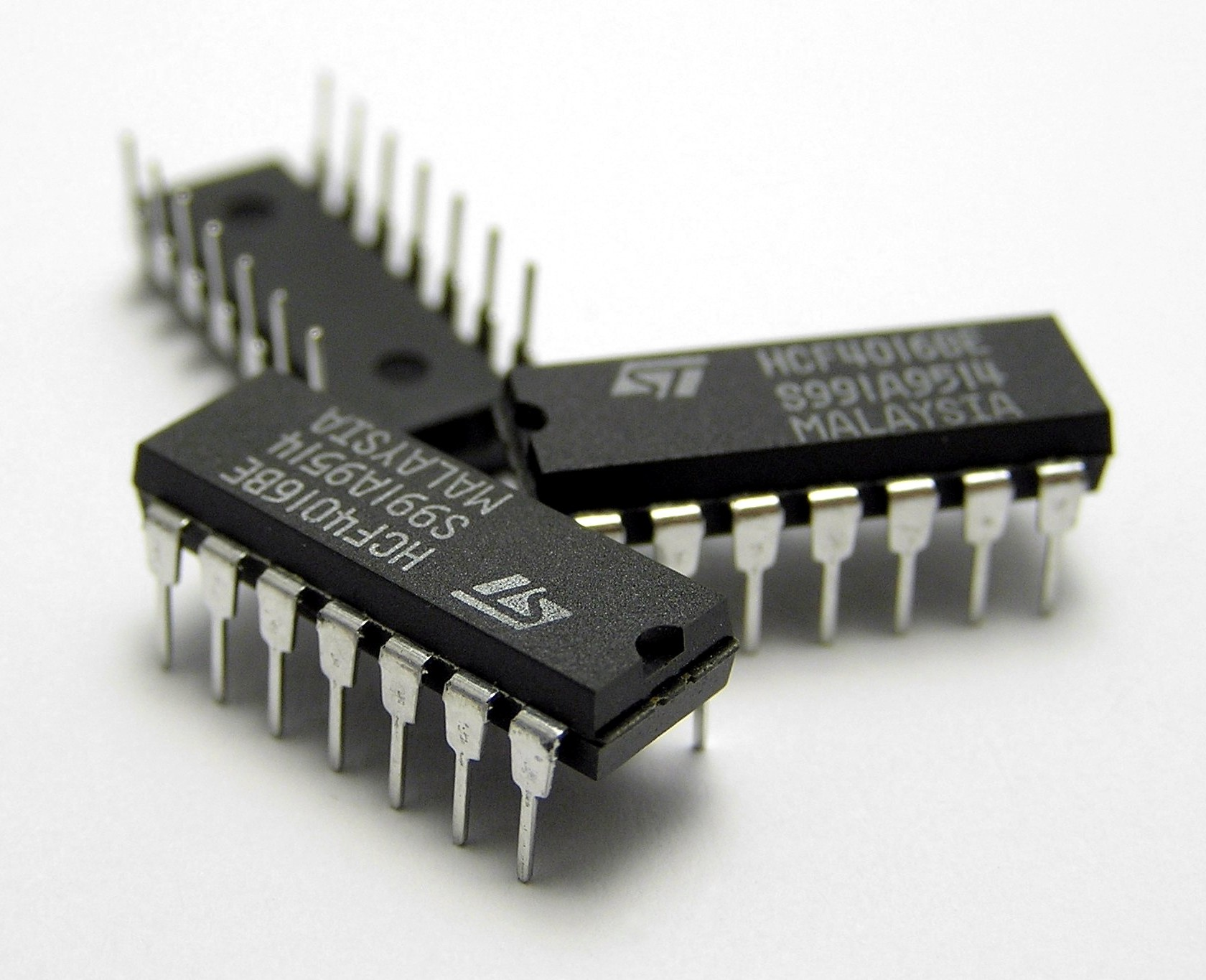
First, let’s start with a larger problem, that you can’t just fabricate (fab) a CPU and you’re done. This is part one of that problem, and it’s packaging. Once the silicon is etched and cut into separate chips, it needs to be packaged. This is not just slapping a bunch of plastic or ceramics around the chip. A poorly packaged chip will show problems that prevent it from operating correctly. And modern packaging is a far cry from the 1970s DIP modules, pictured below. A DIP packaged chip might have 40 or so connections. A modern chip can have hundreds of connections. And it may be housed in the same package with other chips, either support chips, or because they’ve adopted a chiplet design to improve yield (number of successful chips on one 30 cm wafer). Packaging is done in Taiwan and because it isn’t sexy, no one focuses on it. Without packaging, you have nothing. And chips etched in the US have to be flown to Taiwan for packaging. If China invaded tomorrow, and all the etching was done in the US, we would still have to fly the chips over for packaging.
Next part of you can’t just fabricate a CPU. A computer isn’t a CPU. There are other chips on the motherboard that control various features. For example, there’s a chip that controls the attached drives. It’s actually a little CPU in its own right, likely running a variation of Linux. Then there are chips to manage the power through the system. These are not simple voltage regulators, they are programmed to ramp up and down the current to keep the CPU running efficiently and cool. You likely have chips to handle all the slow speed IO, like USB ports. That’s not done directly by the CPU, there’s a separate processor for that. You can’t just make the CPU in the US and make a computer without all these other critical chips. Most are made in Taiwan, some in Japan, some in Korea, and some in China. That’s right, you already can’t assemble most electronic things for the US without Chinese made parts.
Next, you have to understand that Apple would buy chips from China. And so would Google and HP. If China took Taiwan tomorrow and the option was to go under or buy chips from a now Chinese controlled TSMC, Apple, Microsoft, Google, Meta, or whoever would buy the chips. Even if it meant entering into agreements that require more of the design to be done in a Chinese controlled company that would rip off the IP. Because going without sales (and maybe going under) is worse than maybe losing some US government sales. Plus, the US government will come around when there’s no option. In fact, it might make some things easier and they make even more money in the short term. If you go to these companies and say it might cost you a little bit more, but you insure your supply from being cut off, they would choose not to spend a little more. They will just assume they can continue with business as usual, buying chips from a Chinese controlled Taiwan. And they’ll be happy to do it.
Related, is the executives won’t believe it. Just as the Ukrainians didn’t believe the Russians would actually invade, and it was just a war game, as the Russians were setting up field hospitals on the Ukrainian border to treat the expected wounded, these business idiots don’t believe it will happen. I don’t even think it entered Tim Cooks little pointy head, as he sat through a screening of “Melania,” that China views the situation with anything other than a money lens. That’s because, like all business idiots, he views the world in a money lens. Why would China do something that would cost them money? The idea that China has felt humiliated and carved up by the West and this is about national pride is alien to them. Pride? If it costs you money? Tim Cook sat through a screening of what was essentially a bribe from Bezos to Trump to protect his money. Executives periodically line up, lips puckered, to pull down Trump’s piss-stained shorts and kiss his un-wiped ass. Money good. Must get more money. Corruption make more money faster.
For all these reasons, until China invades Taiwan, US tech companies are going to do a goddamn thing. And when China invades Taiwan, they will happily license their IP (their chip designs and process documents) to the Chinese controlled TSMC. The fact China will cut them out of the fucking loop once all the IP is stolen is lost on them. Just as they have done with every step of the way so far. Just as China is learning to cut Western designers out of other products. Why would you buy something at a premium, just because it has a Western label on it, when you can buy from the Chinese factory at a discount? Why would you buy an US branded computer when all the chips come from China, and it’s manufactured in a Chinese factory? It’s not like they’re going to get payback for the US putting spyware into the US networking gear bought by Chinese companies.
Once upon a time, there was a thing called the Marshmallow Test. You take a preschool aged child into a room and tell them if they don’t eat the marshmallow on the table, they’ll get that one and another one later. The idea is to see which kids will become doctors, lawyers, and CEOs, by delaying gratification, and which kids will scroll Tik-Tok and scratch their junk for a living. It turns out the whole thing was bogus, but it made a lot of parents try this at home and weep to see little Johnny gladly stuffing the first marshmallow in his fat little mouth. No delayed gratification. No future. Delayed gratification is not what business idiots learned. They learned to demand more marshmallows or else they’ll stop going potty in the right place. Just as they’ve learned to demand tax breaks, guaranteed loans, or other inducements to do the right thing.
If you think you’re going to get Tim Cook to buy a US made chip for his Macs or iPhones, well… he might. He might buy some from a Fab in Arizona to kiss Trump’s fat ass, ship them to Taiwan to be packaged, and then off to China to be assembled into an iPhone. Because Tim can’t package the chip in the United States. Nor can he make all the other parts of an iPhone in the United States – as just a practical matter. And as far as he’s concerned, it’s just keeping Trump happy. Just like he goes through the press conference (along with many tech leaders) announces a bunch of stuff but does nothing. Just like NVidia was supposed to invest 100 billion… I mean 30 billion… I mean up to 30 billion in OpenAI1. Business idiots just say words that have no meaning. He will do the bare minimum necessary to keep Trump happy so Apple doesn’t have to worry about the administration lobbing trade bombs at Apple. He will make the bare minimum number of chips in the US, though parting with that extra nickle every iPhone makes him weep.
Note that this story from Forbes does not invalidate my point. They will likely have US workers shove motherboards flow in from into a case and call that American manufacturing (because, remember, other parts come from other parts of Asia, including China). On their lowest volume product. And a vague promise for other stuff. All so they don’t have to pay a significant tariff on iPhones (their highest volume product).
- Note that $20 in McDonald’s gift certificates counts as “up to 30 billion.” ↩︎

 I wish I was like you/easily amused