The Tribe is Speaking

I spent 9 paragraphs ranting about the authoritarian tactic of accusing your enemies of financial crimes, prosecuted by a highly political machine, to discredit and remove them. I only touched on, in passing, the state sanctioned, extra-judicial murder of Renee Good the next day. My thoughts go out to her family. I find her murder especially troubling, and more indicative of a dark and ugly truth.

The first thing they did to the woman, when her body wasn’t even cold, was to paint her has a member of the other tribe. Don’t investigate the murderer, investigate who else is in her tribe. Those mentally stunted weirdos even asked (out loud) who paid her to be there. Find out who’s part of her tribe and let them know they’re next. The shooter wore the tribal uniform of the paramilitary, with at least one gun, as we’ve seen from Charlottesville through the January 6 insurrection, to today’s ICE enforcers. The tribe circled round him, likely not even seeing the murder as a bad thing, which is how video from the murderer’s perspective may have leaked. But they don’t see it as murder. Murder is only in your own tribe.

Will this be a one off? No. When I see how amped up and angry the ICE and CBP agents are, and how scared they look when people start to gather around them, I don’t think the shootings so far will be an aberration. I suspect they will become more confrontational, more aggressive, and even less restrained by the law and the constitution. And fear will encourage them to pull the trigger. And the tribal dynamics will interject them more and more into “blue” cities for exactly this type of confrontation.

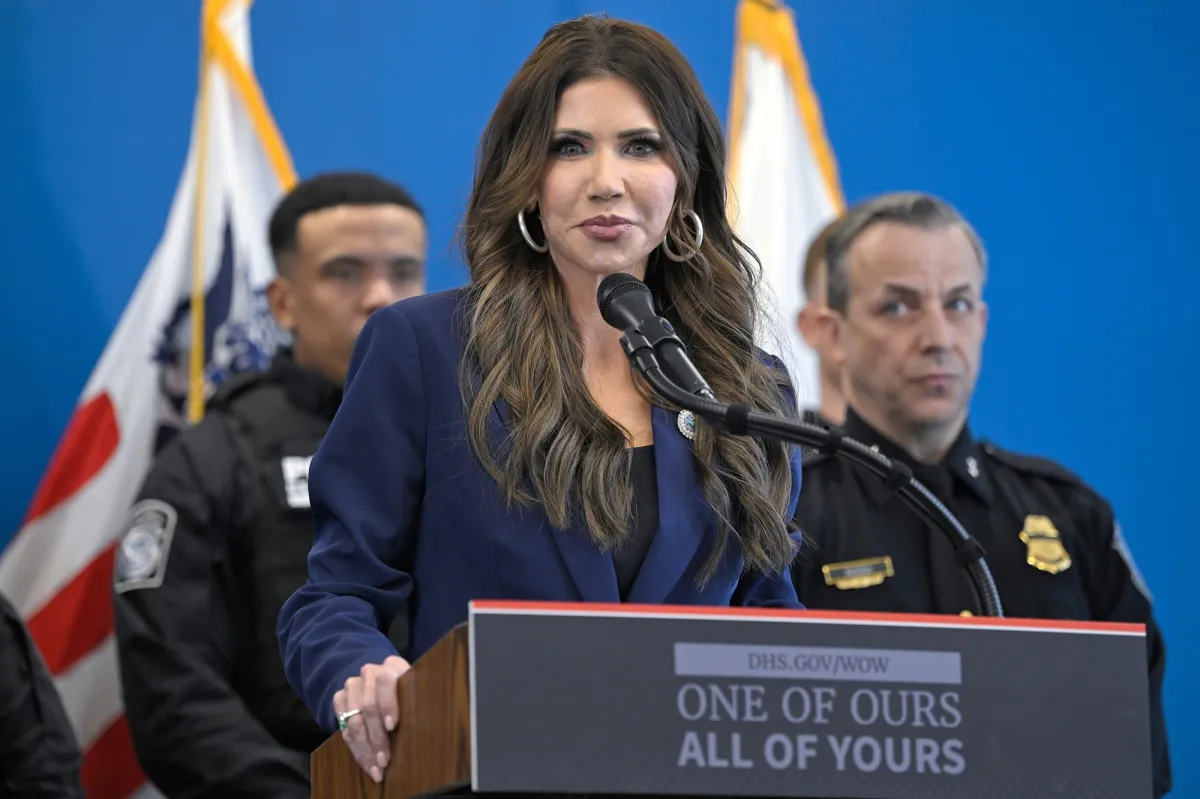
The agents will realize their tribe provides two lines of protection. First is the FBI and DoJ which will excuse the shooting and prevent a local investigation. Second will be a pardon from the tribal chief. Take the shot, the tribe will protect you. And if people resist, the tribe will make sure the whole neighborhood or city is miserable from crackdowns and collective punishment. The tribe will hurt the other tribe. And when the Homeland Security director shows up with a “One of Ours, All of Yours” sign, I think they lack the historical or cultural understanding of what they’re doing, except that they are intentionally reinforcing tribal membership.

Or, maybe they do understand the historical implications of that sign. In which case so much of our country is infested with the worst kind of racists and authoritarians. That could very well be. Farmers were willing to vote for an immigration crack down that cost them their laborers, even risking their export markets. They may not recognize it in themselves, but that kind of behavior suggests they care more about racial identity than about their business. They just wanted to hurt the other tribe, not true Americans like themselves. Punish the blue state tribe and keep out the new tribes. And their boy knows the tribe, he’ll be good for a government handout like his last administration, should tariffs cause an issue.

It’s the same impulse behind my sense of schadenfreude when I hear yet another FAFO story. But in my defense, they voted for the racism, bigotry, and disregard of the law that’s biting them in the ass right now. I only wish to give them the dignity of their choice. I don’t really follow sports. I don’t see 11 strangers failing to convert on 4th and 1 as having failed my tribe. But a lot of people do. Maybe 4 out of 5 people have that kind of deep tribal instinct. The best part of mankind tries to get past this tribalism to form bonds between peoples. The kind of tribalism that the New Testament specifically tries to overcome. That’s the whole point of stories like the good Samaritan.

What reinforces tribal membership? Race is part of it. It’s almost impossible to hide your race. That’s why they feel so free to arrest anyone based on race. If “those people” don’t like getting arrested, they can go somewhere else. Next is accent and speech. You might be an American, but you don’t sound like their tribe. You’re part of the other tribe. Religion is part of it, especially outward demonstrations of faith. And the dozens of little cues like Mar-a-Lago face. Or hyper masculine characteristics, like the kind of physique that requires a possible course of HGH or anabolic steroids. A particular type of license plate or car. The music you to which you listen. Or the drink you order at a bar. All those things signal your tribe.

If you’re a good person, you temper your tribalism. You don’t relish in the misfortune and pain of others. Tactics like collective punishment should be abhorrent, if have a sense of justice or empathy. America works if the process is more important than tribal victory. Once tribal victory becomes the only thing that matters, the whole thing falls apart. Because those tribal feelings are not necessarily conscious thoughts, they can invade into the actions of people who are especially admonished to be non-tribal. Why do you think police officers target certain people, even if they’re the same race? Because they are not a member of their tribe.

The sign in front of Kristi Noem is a tribal sign. In fact, it’s particularly despicable. The dog-whistle comments help reinforce that sense of tribe. It sends a message of twisted unity. They need to promote the in group and create an “other” out group. Murder is only within the tribe. If you kill members of the other tribe, it’s justified to protect the tribe. That’s why they repeat the same accusations, over and over again, no matter how patently ridiculous they sound. To reinforce their enemy’s membership in the out group, the other tribe. The goal is to make the other tribe so distinct that you aren’t even killing another human being when you kill them. You are just eliminating a threat. If you kill one or two by mistake? Good, maybe their tribe will get the message.

We need to oppose this is because the same territory cannot be occupied by two tribes. I don’t know how the American right comes back from deep tribal thinking. There is tribalism on the left, but so far it mostly eats its own, and has not presented as an existential threat to others beyond social media Ethnic cleansing (the effective policy of ICE) and mass murder and genocide, are the means by which one tribe takes ownership of a territory. Like two battling groups of chimpanzees, with one group forcing the other out. When people operate at this basic level of social development, the end has been on full display for the last 10,000 years of human history. The goal of punishing “blue” cities is to convert them (great) or get rid of them. If they cause enough pain and enough disruption it will maybe make them dissolve? Or go away? We’re not operating at the intellectual level once we descend to tribalism, so it doesn’t have to make complete sense. But then the tribalism speaks, listen, and recognize it for what it is.

Is the Job Market Actually Good?

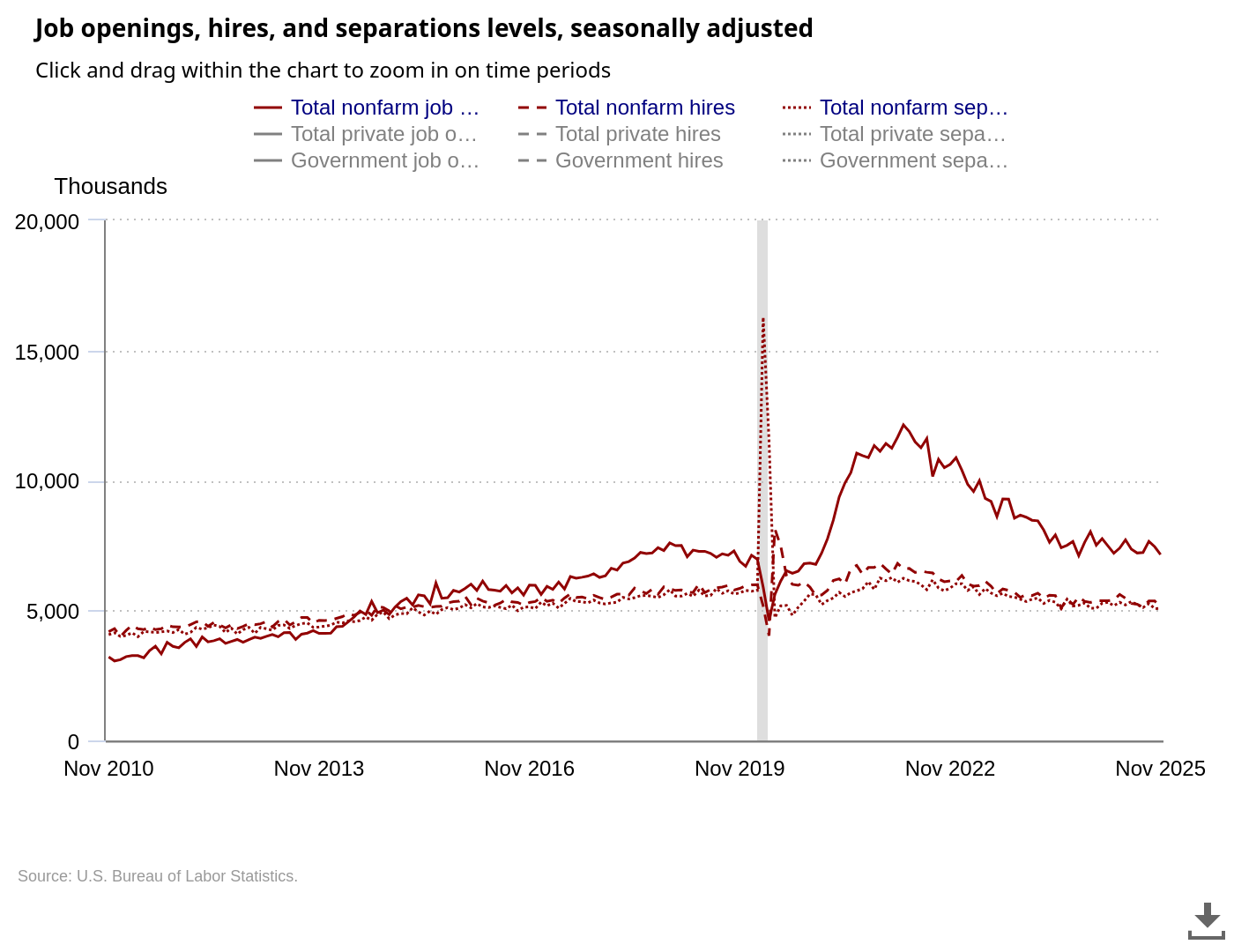
There is never just one number that gives you the whole economic picture. In some cases the number itself is bogus (CPI) and what we really care about is the change in the number over multiple periods. That’s why policy is rarely made on just one reading. As much as people are complaining about the job market, maybe the actual job market is still in good shape? Today we got the JOLTS (job openings and labor turnover survey) numbers for the last month.

The chart from the BLS looks like it has a lot of openings, with the separations (layoffs and quits) slightly below hires. There is a giant grain of salt on the openings, in my humble opinion. There are a variety of reasons, but what I’ve seen personally are: 1) openings that are just trolling for resumes; 2) openings to justify H1-B visas; 3) ghost jobs; and 4) fishing.

The first are job openings that aren’t for ‘real’ jobs, they’re just to gather resumes from applicants. Who’s out there? What skills do they have? What are their compensation demands? Second are openings to justify H1-B visa requirements by demonstrating it can’t be filled by a current US worker. Third are the jobs posted to show a company is growing and exciting. And finally, they might get lucky and land a person that is way more qualified than they would normally be able to nab. I don’t trust the openings data to reveal important information, and instead I’m just going to focus on separations and hires over the last few months. The pandemic distorts the data.

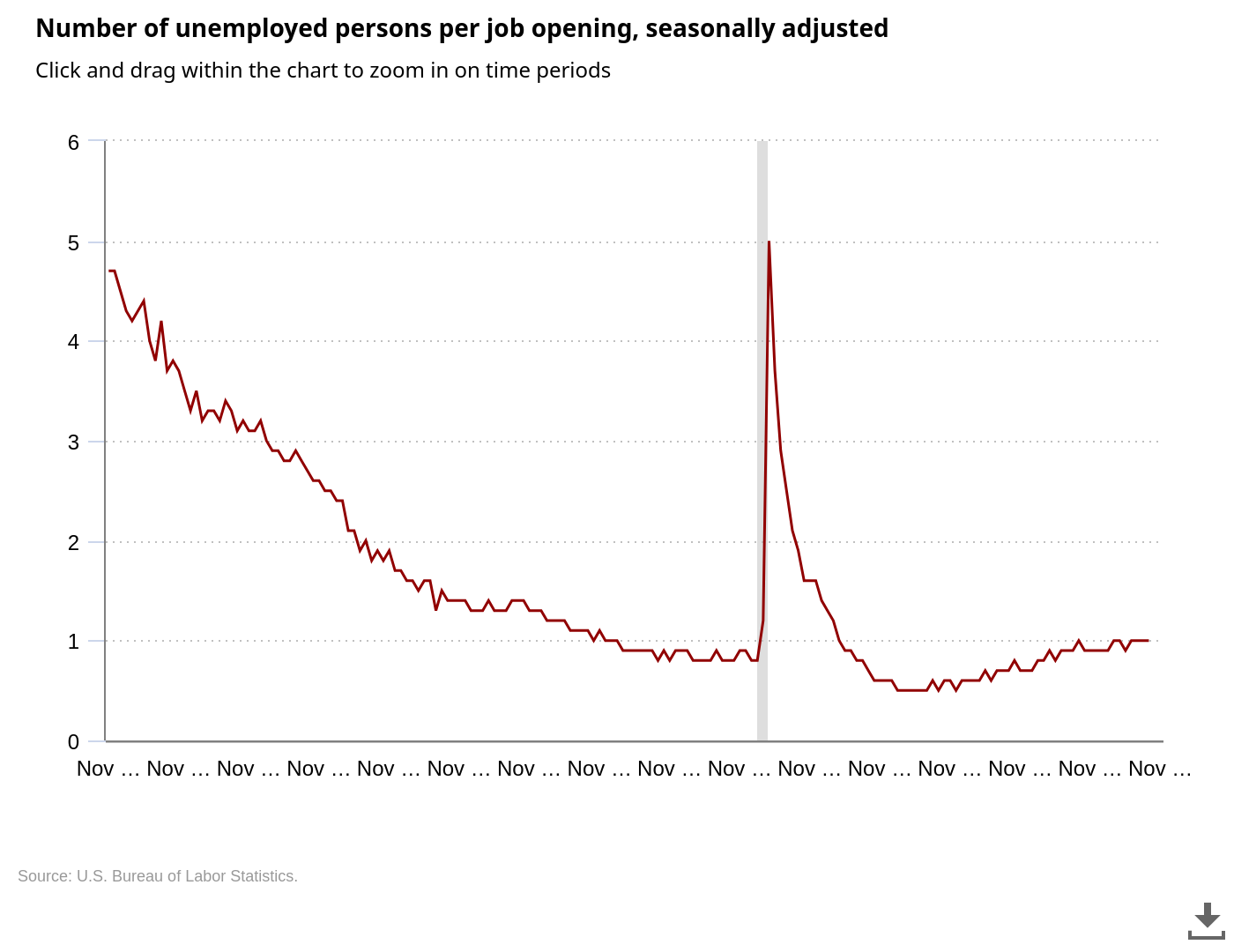
Here we see that both hires and separations are trending down. This would be consistent with the anecdotal stories of job hugging. Note that separations include both quits (which may often translate to an offsetting hire), and layoffs (which do not necessarily result in a hire). Looking at data from FRED, I suspect that quits have fallen off while layoffs are accelerating, but I haven’t done the math to validate that. However, we are pushing back toward more than one unemployed person per opening. And remembering my suspicion that a number of openings aren’t valid job openings, it means we are probably already more than 1 unemployed person per actual, real job openings.

Is the job market in good shape? I’m not sure it is, but I’m far from convinced it’s in bad shape. After all, it still appears we have slightly more hires than separations (which includes quits and layoffs). So if someone (on average) is getting hired when someone quits or is laid off, we are not in a bad state. And if we ignore the pandemic data, we see the number of unemployed people to open positions is much lower than the recovery after the 2008 recession. But we are certainly not in the post-pandemic world where we hit .7 unemployed people per opening. That was nuts. But if that’s all that you remember, and that’s your yardstick for the labor market, this middling to good labor market must seem like hell.

Social Media Is Not the Printing Press

If I read one more op/ed or article where social media is compared to the printing press, I’m going to barf. The latest one is in the NYT, and quotes a number of published important people about the inevitability of all of this. That it’s a fundamental technological change, like the printing press. And who would want the printing press stopped? Sure, it helped fuel hundreds of years of brutal religious wars, but look at where we are today. Mark Zuckerberg is on par with Johannes Gutenberg. We just have to accept the misinformation (also spread by the printing press), libelous material (also spread by the printing press), and the hundreds of years of brutal, bloody, and barbaric religious wars between illiberal regimes to get to something good.

First, let’s get some of the printing press mythology out of the way. Johannes Gutenberg did not invent the printing press. There were presses before Gutenberg, but they were based on techniques such as carving into wood to create images. To publish anything more than pictures with that technology was hard and expensive. Gutenberg’s innovation was to create type from cheap lead and make that type movable (settable) on the page. It was too expensive to make the lettering out of bronze or brass. Lead is plentiful, cheap, and easy to work. If the letters wear down, you melt the lead and stamp more letters using the bronze or brass stamps. It made publishing a book, using a press instead of monks and quills, a commercially viable project.

The internet itself may be the more correct printing press analog. But social media is not. Social media, unlike the invention of movable type, is a creation of law. Prior to the passage of section 230 in 1996, a site like X would have been effectively impossible. Why? Because X would have been held liable for the content of the posts, regardless of the author. Thanks to section 230, X can promote social media posts that libel, slander, threaten, defame, intimidate, or harass individuals with little or no legal exposure. If you want to go after the perpetrator, you have to go after an army of dimwits, hidden behind a degree of anonymity that makes prosecution difficult, if not practically impossible.

Yet many intelligent people confuse this legal loop-hole as a change in fundamental technology. What if the New York Times suddenly started printing non-factual, slanderous content? They would be sued. What if the Washington Post just printed screen shots from the Wall Street Journal as news? They would be sued. What if People magazine suddenly started telling teens that no one likes them and that suicide was a good thing? They would rightfully get sued and maybe criminally investigated. We dealt with this problem long ago with print publishers. It’s not insane to think a place publishing a piece of content or information is liable for that content or information.

But isn’t social media just the stuff regular people post? No, you ignorant fool, it is not. If you believe that lie, you are willfully ignorant of the reality around you. It is a mere fraction of what the rubes and the simpletons post. A large portion is the product of professionals who use features of the platforms to promote ideas. These range from intelligence agencies creating chaos to people trying to sell cosmetics. What you see as the product of ‘just regular folks,’ is a highly curated feed. Imagine a print publication that took submissions from anyone. Then those people vote on the submissions and the print publication goes forward with the issue. Their goal is to aggregate content that gets folks to pick up a copy and look at the ads. They don’t really care what’s in their published material. And the headline is something like ‘Donald Trump has Butt Baby with Satan.’ They would be sued. Because it’s print. If you print it on paper, you are a publisher.

But if you do it on social media, it’s not a problem. X or Facebook can run the exact same headlines. They can promote those same stories for the exact same reason, to push ads (and collect data to better target you in the future). Yet they have a pass. Intelligent people are confused by this, as if there is something inherent in some technology that makes X or Facebook incapable of being stopped. That whatever we do today, we would just wind up with new companies tomorrow. The internet would allow for the passage of information, but it’s the legal structures that have allowed for the creation of these massive, multi-trillion dollar companies that are poisoning democracy with the goal of shoving one more ad in front of your face.

If you took the stance that Facebook is acting as a publisher, with its algorithm to select and promote content, the same way the New York Times acts as a publisher, Facebook would cease. If they could get sued because your grandma re-posted a libelous story, they would not let your Nana do that. And if your rejoinder is that it’s not employees of Facebook that generate the content, well, not all the content in the NYT is a product of its employees. They may pay for Op/Ed pieces, where the person is not a staff writer. Okay, if you don’t pay for it, then it’s user contributed? Social media companies do compensate their “creatives” or “content providers.” X and YouTube, for example, have allowed people to build influence businesses by (in part) direct payments. So the social media companies are paying people for content, selecting which content to show, and collecting money through ad impressions. I really fail to see the legal difference between the NYT and Facebook from a liability perspective, except for the invented shield of section 230.

But revoking section 230 would throw a lot of baby out with the bathwater. What about a small, mom-and-pop site in the American Heartland just hosting Bible verses and some miscreant missuses it for nefarious purposes. You would shut them down? That’s the false choice we are presented. Either continue forward as is, or create legal quagmires on every main street between San Diego and Portland, Maine. We could amend section 230 to put the legal responsibility back on to what are essentially publishers. Or maybe we should amend other laws so genuine mistakes or oversights are not criminalized. We already don’t arrest UPS drivers and executives because they deliver illegal material or contraband. Nor do we throw the bank branch manager in jail because the money in their bank was used for criminal purposes (although they sometimes know – and in that case we do and should).

We act like we can’t possibly learn from the past with a new situation in the present. That we just have to repeat the same problems, over and over again, every time there’s a new change. This is a kind of powerlessness brought on by ignorance. It’s on a computer and it’s done by young, clever people who use words most people don’t understand. And it’s kind of magical, if the typewriter is the last writing instrument whose innards you still understood. Because it’s magic, and the magicians who benefit from it say it has to be this way, then it just has to be this way. Francis Fukuyama may be a genius in his area of expertise, but he bows to technology much the same way your grandma does.

There are other arguments, such as we wouldn’t have such a broad dissemination of information about the sciences, or social, or political events. But we do And with organizations that are subject to standard laws and norms for publishers. The internet drives down the cost of publishing and so opens the ability for smaller publishers to come forward. But they are still publishers. If Scientific American online publishes an article on their site threatening the city manager of Watkins, Illinois, they can be sued. It doesn’t matter if they paid for the article, or it was written by their staff, or it was freely handed to them. They are a publisher and chose to publish it. The same threat on X might go unnoticed as it may not even be in the top 10% of threats against people that day, promoted by the algorithm on X. If I set up a news outlet on the internet, and “publish,” I will be sued for the butt-baby thing. But if I’m “just a platform,” taking submissions from users, then I’m actively shielded. Even if it’s the same butt-babies, poorly veiled death threats, anti-vaccine fabrications and all else.

This collective delusion can’t continue in the context of a vibrant democracy. The more we delude ourselves into believing we are incapable of correcting our own creation, that the things the mind of man hath wrought are as unshakable as the strong nuclear force, and that it is as inevitable as the sun rising, the more we will seem like complete morons to future generations.

I often feel like the one guy point at the naked emperor, parading down the street, and wondering why no one else sees this for what it is. I think other people do. I think they’re afraid that if they do anything about the current situation, then their side gets hurt more. If we take away section 230’s protections, it will be the other side that runs amok. Or it will just be big publishers that squeeze out the little publishers. (As if we don’t already have a handful of social and traditional media companies, all owned by politically minded billionaires). But what if there’s a problem and we need to get our base out to protests? What if the other side comes to rule the information landscape?

So that’s where we are. Ignorance about the thing we created and fear its absence will leave our side worse off. And we have many, many instances in our history where fear and ignorance have ruled us, and maybe that’s the example from which we fail to learn.

Would You Do It for $20?

That’s a game you play with your friends. You know something makes your friend’s skin crawl. You ask them how much money would it take for them to participate in that skin crawling activity. The answers vary from “just no”, to “maybe I’ll do it for $1,000,” to “I’d do it for $5”. Then there’s the friend that cements their reputation as a nut, or shows off their nutty side, by just doing it. We got a glimpse of that recently with the Saudi comedy festival.

I don’t put comedians on a pedestal. I don’t think Bill Burr has any special insight into economics, politics, or society. But sometimes the best comedy is pointing out the world as it actually is. And you get a reminder that something we all tiptoe around as oversized, dangerous, and deep is actually small, harmless, and stupid. Even if media, culture, celebrities, and politicians are telling you it’s a great idea, or it’s a sacred cow, or it’s “dangerous,” for a minute you see it’s stupid and we were silly for thinking otherwise. I don’t mean in the “do your own research,” vaccine denying, tin-foil hat way. I mean in the way that we have sacred cows we tacitly or explicitly refuse to question, but should.

Three comedians walk into a racist, brutal, autocratic, fundamentalist regime that doesn’t respect human rights: Bill Burr, Whitney Cummings, and Pete Davidson. Pete Davidson is the easiest one to analyze. I don’t really think there’s a huge moral compass there. He seems like the kind of guy who just picks up on the vibe around him. He’s the friend that says “$20 – okay,” because he wants the $20 bucks. He has plenty of cash, but $20 more would be better. Do I care he went to Riyadh? Not really. It just cements my opinion of him as the gross kid.

Whitney Cummings is the queen of bad decisions. She can say, after the fact, that everyone around her made it seem like such a good idea, and the money was amazing, and that she made another bad decision. It’s one of a long line of bad decisions. It would make me wonder if she’d gained any insight about making bad decisions, or avoiding bad decisions, but it would track. She’d have a good five minutes in her next show about what a bad decision she made, and how bad she felt, as she enjoyed the really nice car she bought from said paycheck.

Bill Burr is the tough one. Because Bill Burr really doesn’t need the money. If it were revealed that Pete Davidson was declaring bankruptcy – that would track. Bill Burr is a smart guy. If not smart, insightful at the very least. He’s called out greed, evil, and hypocrisy on many occasions. Every once and a while an excerpt from his pod-cast pops up and he calls folks out for being the worst people. I think he’s also aware that condemning rape victims to be punished, or beating women for not wearing head-dresses, or treating foreign workers like slaves is bad. Pete and Whitney might not think about the fancy hotel they’re in as the product of slave labor. I’m not saying Bill wouldn’t stay there. I’m just saying I imagine his conscience would at least twitch.

And despite the assurances from people like Bill, that the Saudis are just funny people (as if we have no understanding of Saudis), and he could say what he thought, it doesn’t track. This isn’t like going to the Soviet Union and playing a show for a repressive regime, because it’s a closed society with little cultural exchange. Plenty of Saudis travel and live outside Saudi Arabia and plenty of Americans have lived in Saudi Arabia. It’s impossible to say he was ‘freer to speak his mind there,’ because the contract stipulations leaked and included specific topics there were off-limits. Other comics had their invitations rescinded for jokes. We know they were censored. I’m hoping Bill Burr pulled back because he was being censored. Otherwise, that would mean…

But this is where we are. Top, head-line comics, with plenty of money, will gladly play for a few dollars more to legitimize a country that is the embodiment of the backward stupidity they would otherwise ridicule. Or maybe it was always just a bit, like Michael Jackson using a falsetto when out in public, to make us think there was something there. Maybe they didn’t care what they said, or who they said it to, as long as the checks keep coming. If it means making fun of racists, bigots, and (Christian) fundamentalists, that’s fine. If tomorrow making fun of people of color, punching down on gays, Muslims, Jews, or free-thinking people makes more money, well, they can do those bits, too.

And to a larger degree we see companies, especially media companies, caving to pressure because already absurdly wealthy people could make more money “settling” with Donal Trump. We see colleges willing to give up intellectual freedom to preserve their jobs and money. These are institutions that should have a very real, necessary, and strong allergy to authoritarians. Media companies need that allergy because they need creative independence. Universities because they need freedom to think and explore ideas. Have they had to compromise in the past? Yes, and almost always those two industries have regretted it. It’s always a shameful part of their history they never hope to repeat again.

But that’s the beauty of Trump’s America and, in a smaller way, the Riyadh comedy festival. It lays bare the fact that the moral compass of people with money bends towards more money. Movie studios, TV networks, and publishers were always businesses first. But they couldn’t stop the editorial message coming from the creative people they needed to have a product to sell. Universities always needed to bend to their alumni, donors, and grantors, but couldn’t serve their purpose without giving academics broad liberty of opinion. And comedians have always had to put food on the table, pay the rent, and make a buck.

But the institutions, people, and companies with the greatest ability to do the right thing, to fight the right fight, and to stay on the right side of history, have shown they would rather just have the money. Even at the expense of what makes them valuable, hoping that it will all blow over as something else happens. And the next time Bill Burr is making fun of Donald Trump being an autocratic bigot you’ll forget he helped legitimize the kind of autocracy Donald wishes he had.

Maybe Whitney or Bill will do Trump’s next birthday gig, if the money’s right, and they’ll be free to speak their truth in any way that’s not prohibited in the contract.